
Flame-retardant materials reduce fire risk in electrical and electronic, household appliance and electric vehicle applications.
Reduce fire risk in electrical and electronic, household appliance and electric vehicle applications.
Request a Sample Ask an Engineer →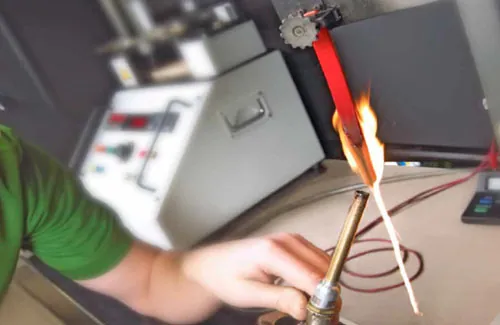
Flame-retardant (FR) plastics are essential to the devices we use every day and are a valuable tool for fire protection. A fire requires three basic elements: fuel, heat and oxygen. Flame-retardant science uses chemical reactions to suppress one or more of these elements. While no plastic is completely fireproof, flame-retardant thermoplastics delay ignition and flame spread, increasing escape time and making them a critical part of product design. In addition, part design and nominal wall thickness are key factors in flammability certification.
Differences in Flammability Testing
With globalization in recent years, demand for resin materials that meet global requirements keeps growing. Figure 1 shows the differences between European and US flammability test methods.
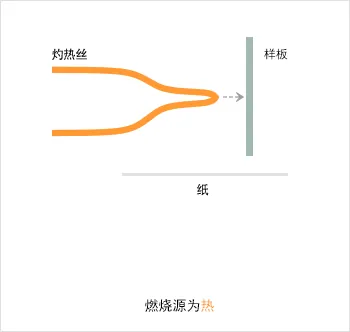
Glow-Wire Test
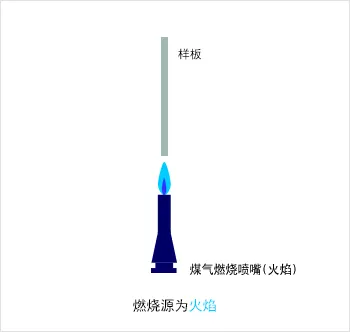
UL94 Vertical Burning Test
Acrylonitrile Butadiene Styrene (ABS)
ABS FR series — continuous use temperature up to 175 ˚F (80 °C). Easy processing, chemical resistance, increased surface hardness, good impact strength and overall toughness. Suitable for electroplating.
Applications include:Consumer products, business machines, housings and medical devices.
Polypropylene (PP)
PP FR series — outstanding fatigue resistance and excellent chemical resistance. Performs well at operating temperatures up to 225 °F (105 °C).
Applications include:Consumer products, business machines, housings and medical devices.
Nylon or Polyamide (PA)
PA FR series — excellent mechanical properties in continuous use up to 275 °F (135 °C). Easily molded in thin-wall sections; good chemical resistance.
Applications include:Electrical and electronic connectors, electrostatic painting applications.
Polycarbonate (PC)
PC FR series — excellent impact strength, high heat resistance, good electrical properties and outstanding mechanical properties up to 250 °F (120 °C). Controlled shrinkage, dimensional and thermal stability, good flow and good surface finish.
Applications include:Electrical and electronic connectors, electrostatic painting applications.
Polybutylene Terephthalate (PBT)
PBT FR series — good dimensional stability, high heat resistance and chemical resistance. Good flow in thin-wall sections, fast crystallization, low mold temperatures and fast cycle times make this material economical to mold.
Applications include:Electrical and electronic connectors (preferred over nylon where moisture absorption is a concern).
Polycarbonate/Acrylonitrile Butadiene Styrene Alloy (PC/ABS)
PC/ABS FR series — higher heat deflection temperature than ABS and better low-temperature impact resistance than PC. Good dimensional stability and easy to color.
Applications include:Computer and business machine housings, appliances.
Polycarbonate/Acrylic Alloy (PC/PMMA)
PC/PMMA FR series — higher impact resistance than PC/ABS with the easy processing of acrylic. Excellent flow, ideal for thin-wall molding.
Applications include:Portable device housings, lighting fixtures, appliance components, toys, furniture, automotive parts and medical diagnostic equipment.
Thermoplastic Vulcanizate (TPV)
TPV FR series — offers a broad range of elastomeric properties in addition to excellent heat resistance. Can be combined with RoHS-compliant, halogen-free FR systems.
We continue to develop conductive compounds that address specific performance needs in products affected by static buildup. We have also expanded our compounding technologies to include electrostatically paintable (EPP) compounds, conductive compounds for extrusion, conductive thermoplastic sheet, carbon-based compounds and highly conductive compounds. The fastest way to learn more is to contact our sales engineers!